


Key Takeaways
- Snakes enter homes for food, shelter, or relief from extreme weather. Rodents such as rats and mice can attract snakes indoors, while dark, secluded spaces like basements, crawl spaces, garages, and attics provide shelter. Some snakes enter accidentally while exploring.
- Small openings and sheltered areas let snakes into homes. Snakes can enter through foundation cracks, gaps beneath doors, openings around plumbing and utility lines, vents, and damaged screens. Outdoor areas with tall grass, leaf litter, brush piles, and stacked firewood can also provide hiding places near the home.
- Effective snake prevention requires removing, excluding, and managing habitats. Homeowners should avoid approaching or handling snakes, seal potential entry points, reduce outdoor hiding places, and address rodent infestations that may attract them. Trutech Wildlife Service can inspect the property, safely remove snakes when possible, and recommend measures to reduce future encounters.
Table of Contents
Snakes in the house typically enter either by accident or in search of food and shelter. Either way, most snakes tend to come in at the ground floor of a structure. The reptiles find entrances through gaps under doors, openings in the walls and foundations, around plumbing and vents, and even through pet doors.
Snakes prefer to hide in well-covered areas outside, including firewood piles, leaf litter, tall grasses, and rock walls. If such areas are near the structure, snakes can easily gain access to the home.
Homeowners may find snakes in various areas of the home, but most are found in basements, crawl spaces, dirt cellars, and garages. Some snakes are excellent climbers and can enter into attics through holes in the roof.

WHY IS A SNAKE IN THE HOUSE?
Snakes in the house find their way inside by following food sources such as mice and rats. Once snakes realize that there is an easy food source, they will move in. Finding shed skins usually points to snakes taking up long-term residence. Other times, snakes enter the home by mistake and are generally searching for a way out when homeowners encounter them.
Most Common Places Snakes Hide Inside the House
- Basements or Crawlspaces
- Garages
- Attics
- Bathrooms
- In the Yard
Snake Control Service
How We Get Rid of Snakes
Why Do Snakes Get Into Crawlspaces?
Snakes typically enter homes at the ground level. Cracks in building foundations or walls larger than 1/4 of an inch in diameter are wide enough for most species of home-invading snakes to slither through and are the most common point of entrance for the pests. Vents, pipes, the spaces under doors, and gaps around utility and plumbing lines also make suitable entrances.
Why Do Snakes Get Into Basements?
When snakes enter homes intentionally, they are usually following prey or looking for suitable locations for hibernation. In the wild, the pests frequently rest in the spaces under rocks, and basements provide a similar environment. They offer consistent temperatures, moisture, darkness, relative quiet, and minimal activity, which makes them perfect for overwintering.
Property owners may also find snakes in the basement when rodent or insect infestations are present. Though different species of snakes prefer different food sources, rats, mice, and various types of insects are common prey. These pests are all commonly found in basements when they infest homes, thus making the basement attractive to hungry snakes.

HOW DO SNAKES GET UNDER THE HOUSE?
Snakes are long, cylindrical, and legless, which means they are not typically skilled climbers. When the pests invade homes, they must enter through openings found in the building’s foundation. This may include cracks in the bedrock, slits under doorways, pet flaps, tunnels that lead under structures, and warped siding. Once inside, snakes search for secluded locations with plenty of food and often end up in basements or crawlspaces.
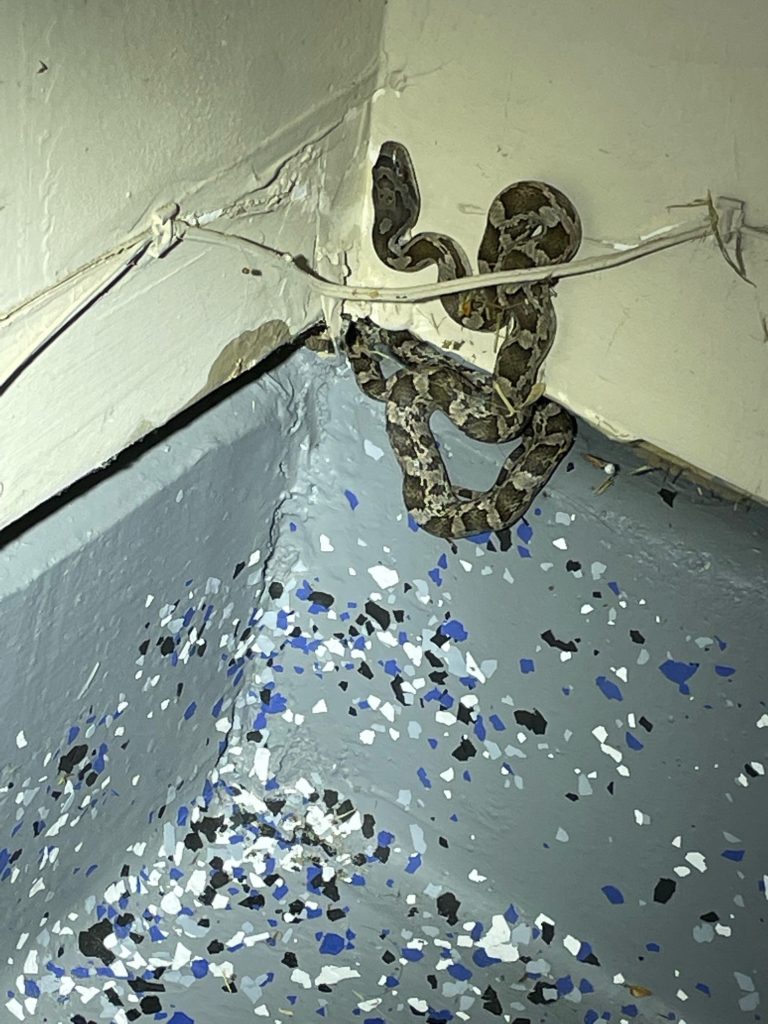
Snakes are natural predators that hunt insects and small rodents. When unsecured containers of pet food or bird seed in the garage attract mice and cockroaches, it can create an ideal hunting ground for snakes. On hot, sunny days, snakes may also be attracted to the cool shade of an open garage, where they can take up residence beneath piles of junk, debris, or lumber.
Snakes in garages usually get there by slithering through an open door or a crack in the wall. However, they are also very good climbers and can enter through unsecured windows, loose roof tiles, or vents. Small opening around pipes, loose boards, and improperly sealed garage doors are all potential entry points.
How Do Snakes End Up in My Bathroom?
Snakes typically enter homes in search of food or shelter from the elements. Bathrooms, specifically the spaces around toilets and drains, are ideal hiding places thanks to their high moisture levels and relative darkness. Snakes gain access to these areas via the gaps around pipes where they enter buildings, or by swimming through plumbing into toilets.
Why Are Snakes in the Attic?
Attics are popular denning sites for snakes because they are often home to infestations of rodents and offer seclusion from human residents. Rats, mice, and squirrels are all prime sources of food for snakes, and when property owners find snakes in the attic, they almost certainly have a rodent infestation, as well. The upper floors of homes are also consistently warm and provide plenty of cover, so snakes are able to regulate their body temperature and stay hidden.

HOW DO SNAKES GET INTO ATTICS?
Since they don’t have arms or legs, snakes are not typically able to climb and therefore tend to infest homes at the ground level. However, certain species, including brown tree snakes, rat snakes, and various types of pythons, are agile climbers. They can easily scale trees and enter homes via chimneys, vents, open windows, and gaps in exterior siding. Once inside, they like to congregate in spaces that see very little human activity, such as wall cavities and attics.

HOW DO SNAKES GET INTO WALLS?
Snakes are nimble creatures able to squeeze into tight crevices and small spaces. They can find their way into buildings and walls through cracks and gaps in siding, windows, screens, brick, and wood foundations. The legless pests also gain access to homes and walls through drainage systems.
Why Do Snakes Get in the Yard?
Snakes enjoy locations that offer both ample cover from predators and plenty of food. Potential food sources range from rodents and other small mammals, to reptiles and amphibians as well as insects. Many yards contain at least some form of snake food and often provide enough cover for use as shelter.
Yards harboring an abundance of food sources and sheltered locations attract high numbers of snakes and increase the potential for human encounters with the reptiles. Snakes in the grass or yard act as a form of natural pest control, but can also create undesirable outcomes.
How to Keep Snakes Out of My Yard?
How can you help provide a snake-free yard?Snake Control in the Yard
Trutech can provide snake control at your property. Our first step is a visit to your home, at which point we will conduct a full inspection of your property and your home. Inspecting the inside of your home is just as important as the outside because snake activity is driven by one thing: a food source. If you have a rodent or pest control issue inside or around your home, in all likelihood, that is the reason you are seeing snakes. Inspections of both your crawlspace and attic space are vital in order to determine the snakes’ food source. During the course of our inspection, if we find any snakes, we will remove them if possible. Click Here
PROBLEMS CAUSED BY SNAKES IN GRASS
People who live within the range of venomous snakes should take the pests seriously and proceed with caution in suspected habitats. Once snakes are in the yard, they can easily enter buildings, where uncomfortable encounters are likely to arise and the potential for bites increases. Snake bites are painful even when the snake lacks venom. It may be due to the possibility of a bite that creates fear of the animals. Both pets and children in snake-ridden areas are at high risk of encountering a snake in the grass, as they traditionally frequent and play in yards.
How to Prevent Snakes from Getting into the House
It takes a combination of different actions to keep snakes from entering the house. Exclusion, habitat modification, and eliminating potential food sources should all be used together to ensure that snakes do not get into homes.
Depending where you live, homeowners may face both venomous and non-venomous snake incursions. Any cornered snake can strike whether venomous or not, making it highly advisable to contact the trained professionals at Trutech to eliminate and remove snakes in the house.
How to keep your yard free of snakes
Expert Answer
Frequently Asked Questions Snakes in the House
Why would a snake come inside my house?
Snakes may enter homes in search of food, shelter, or protection from extreme temperatures. Rodents such as mice and rats can attract snakes indoors, while cool basements, crawl spaces, garages, and other secluded areas may provide shelter. Snakes can also enter accidentally through gaps around doors, foundations, pipes, and vents. Trutech Wildlife Service can inspect your property to help identify what is attracting snakes and how they may be getting inside.
How can I tell if a snake in my house is venomous?
Identifying a snake as venomous based on its color, pattern, or head shape alone can be unreliable. Snake species vary by region, and some nonvenomous snakes resemble venomous ones. Keep a safe distance, do not attempt to handle or capture the snake, and contact a qualified wildlife professional for assistance. If someone is bitten, seek emergency medical care immediately.
What should I do if I find a snake inside my home?
Stay calm, keep your distance, and move children and pets away from the area. If you can do so safely, close the door to isolate the room without approaching the snake. Do not try to catch, kill, or move it. Contact Trutech Wildlife Service or an appropriate local wildlife professional for guidance and removal options. If the snake poses an immediate danger, contact local emergency services.
Where do snakes hide inside houses?
Snakes often seek out quiet, sheltered spaces where they can remain undisturbed. Common hiding places include basements, crawl spaces, garages, utility rooms, closets, and areas behind stored belongings or appliances. Some snakes may also enter wall voids or other concealed spaces. If you suspect a snake is hiding somewhere in your home, avoid reaching into dark or cluttered areas and arrange for a professional inspection.
How do snakes get into houses, and how can I keep them out?
Snakes can enter through gaps beneath exterior doors, cracks in foundations, openings around plumbing and utility lines, damaged vents, and other unsealed openings. To help keep snakes out, seal appropriate entry points, repair damaged screens, reduce clutter near the foundation, keep grass trimmed, and remove debris or brush piles near the home. Addressing rodent activity can also help reduce the food sources that attract some snakes. Trutech Wildlife Service can help identify potential entry points and recommend practical prevention measures.
Who should I call to remove a snake from my house?
If you find a snake inside your home, contact a qualified wildlife control professional who can assess the situation and determine the appropriate removal method. Trutech Wildlife Service helps homeowners address wildlife concerns, including snakes, by evaluating the problem and recommending appropriate solutions based on the species and circumstances. Service availability and removal options vary by location, so contact your local Trutech team to discuss your situation.

How to Identify Snake Holes in North Carolina and What to Do About Them
Discovering holes in your yard can be unnerving, as it is often difficult to tell what created it, and if it is still occupied or

The Most Common Summertime Pests & Critters
Summer is the season of pests. Bugs seem to cloud our vision; nighttime is marked by a chorus of chittering insects; bites materialize suddenly on

Snake Holes in Florida
Discovering holes in your yard can be unnerving, as it is often difficult to tell what created it, and if it is still occupied or

Are These Snake Holes in My Texas Yard?
Discovering holes in your yard can be unnerving, as it is often difficult to tell what created it, and if it is still occupied or

Can Snakes Climb? Finding Snake Skins in Attic
In Greenville, a homeowner heard the strangest sound in their attic. After an investigation, we found a snake skin in the attic! In South Carolina,

How to Get Rid of Snakes
For most people, finding a snake in your house or in your yard can be alarming. But the fact is, most snakes are harmless to